


Pasatiempo Golf Club
Some golf courses are so steeped in history that the impact seems to hit you the second you step on to the property. Pasatiempo Golf Club in Santa Cruz, California is one of those destinations.
This is more than a golf course; it is a historic architectural masterpiece and, for many lovers of the game, one of Dr. Alister MacKenzie’s most treasured works. Designed in 1928 and opened in September 1929 at the dawn of the Golden Age of golf architecture, Pasatiempo represents MacKenzie’s belief that strategy, contour, and natural terrain should dominate how a course plays.
The course was commissioned by Marion Hollins, a remarkable sportswoman and visionary who sought to build “the best course west of the Mississippi.”
It was meant to be
She brought MacKenzie to California after knowing his work at Cypress Point and recognizing his genius. When the layout opened, golf luminaries such as Bobby Jones, who would later recruit MacKenzie to co-design Augusta National with him, were among the first to play this remarkable hill-laden site overlooking the Monterey Bay.
MacKenzie himself was so enamored with Pasatiempo that he chose to make it his home. He lived beside the sixth fairway until his death in 1934, and to this day a plaque marks the site where the course’s creator watched over play on the land he shaped.
Over the decades, Pasatiempo maintained its reputation as a classic, but like many courses touched by time and changing agronomic practices, some of its original contours, especially on greens and bunkers, had softened or shifted.
Maintaining the aggressive, movement-rich surfaces that MacKenzie intended proved increasingly difficult as agronomic practices evolved and generations of topdressing and bunker adjustments dulled strategic complexity.
To restore this legendary course to its original glory, the club embarked on a comprehensive restoration project that launched in April 2023 with a bold goal: to bring the course back as closely as possible to MacKenzie’s original design intent.
The restoration was led by renowned golf architect Jim Urbina, whose connection with Pasatiempo spans decades, and involved collaboration with Theisen Downing of Earthsculptures, Brett Hochstein of Hochstein Design, and longtime club superintendent Justin Mandon.
What made this project particularly rare and meaningful was both its scope and fidelity to history.
Over an 18-month period concluding in December 2024, every green complex was cored out and rebuilt with modern USGA specifications and Pure Distinction bentgrass. This approach delivered consistent firmness, improved drainage, and restored contours that had been lost to decades of top-dressing and buildup.
According to club leadership, the aim wasn’t just aesthetic as restoring green shapes was the most important step to bring back MacKenzie’s original design philosophy, allowing contours and angles to once again influence shot making.
Bunkers across the course were rebuilt to closely match MacKenzie’s original profiles, including dramatic shapes such as the “whale tail” on the par-4 16th and intricate hazards surrounding other greens.
The restored bunkers not only honor historic profiles, but they also bring back the strategic choices intended by MacKenzie, where angles of entry and exit have real consequences on shot selection.
Restoration work wasn’t limited to greens and bunkers though. The process also addressed turf health and playability.
Bringing in modern bentgrass and improving drainage means the course can maintain firm, responsive conditions without relying on the heavier Poa annua surfaces that once dominated which is an important advancement for both playability and sustainability.
The reaction from those who have played the restored course has been overwhelmingly positive.
Ken Woods, longtime head professional at Pasatiempo, summed up the sentiment with our friends at Links Nation saying : “We are really happy with how the finished product came out. Jim and his team did a fantastic job — especially on the greens, where we have reclaimed so many hole locations.”
Today, Pasatiempo stands as both a monument to MacKenzie’s genius and a living piece of golf architecture brought back to life for modern players.
It remains one of the few places where the architect’s original strategic intent, so closely tied to his work at Cypress Point and Augusta National, can be experienced in its purest form and more importantly can be accessed by public golfers.
Pasatiempo is not just a test of ball striking, but a study in how ground, contours, and design philosophy can define a golf experience. It embodies the idea that architecture matters, not just nostalgia, and that sometimes looking forward means going back to the way the game was meant to be played.
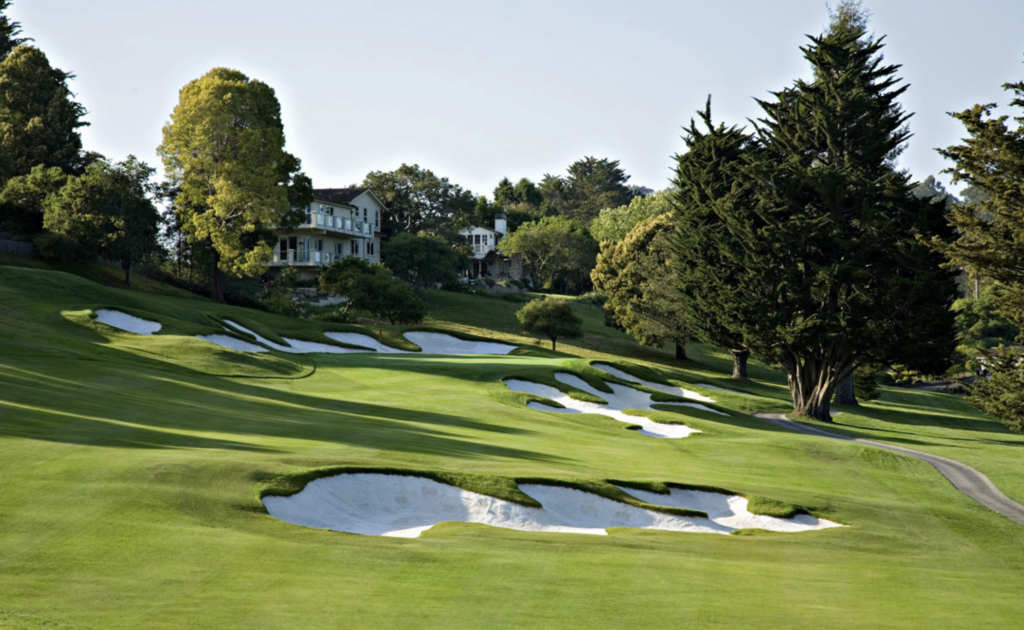
Pasatiempo Golf Club