

Mitsubishi Golf shafts
The advancements in the world of custom fitting over the last 20 years in the golf industry have been exceptional.
Once upon a time, we would all just show up to our local golf shop and buy a driver with a stiff shaft and assume it would be perfect for us. Little did we know, often that shaft that was labeled stiff was actually a regular flex, and we would be dumbfounded why we could never find consistency off the tee.
Since that time, advancements in the technology of shaft manufacturing and the advent of launch monitors have given today’s golfer all the same benefits of science and data that the best players in the world have access to whenever you need it. If you have taken advantage of these advancements, you know how much playing the right shaft can dramatically improve your consistency and performance.
We were curious how the best players in golf utilize these advantages for their game, so we went straight to the source and asked Jason Felicitas, the Manager of Tour Performance & Fitting Innovation for Mitsubishi Golf a few questions about how he helps the best players in the world dial in their game especially given how they face different conditions on a weekly basis.
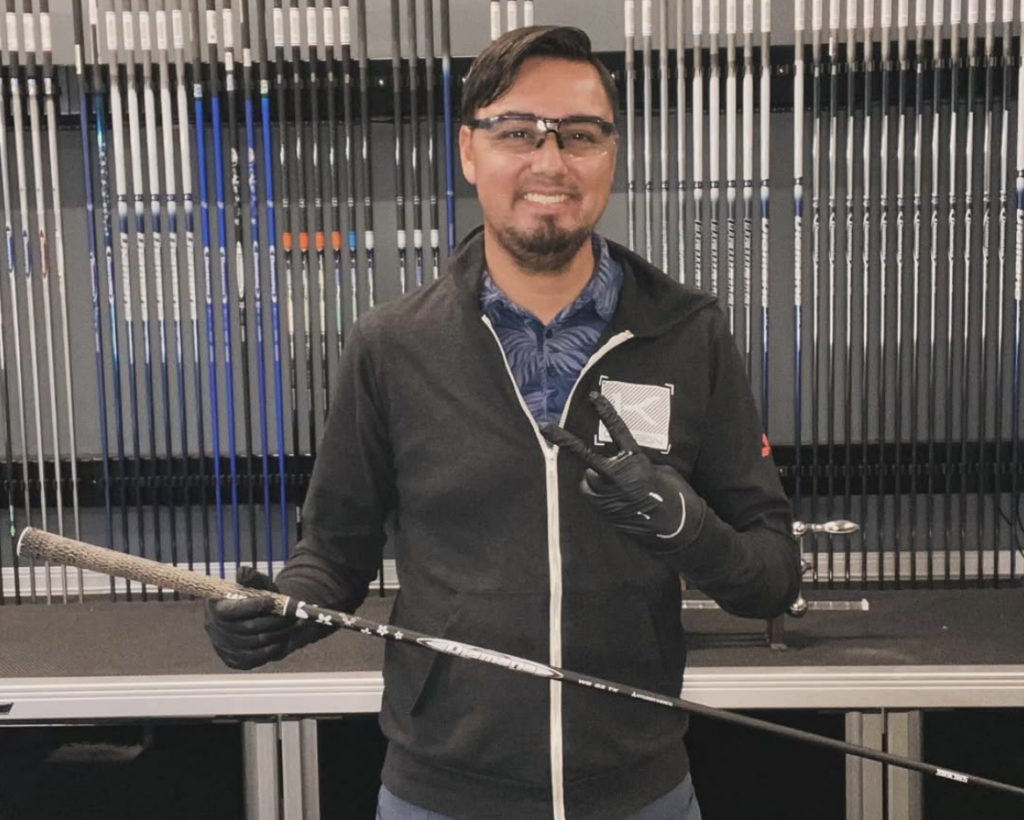
Jason Felicitas (via Instagram)
As you fit the best players in the world daily, do you find that they can use one shaft and it fits all the different playing conditions they face during their travels?
“For the most part, yes, most players do not change profiles based on conditions. It is not like a wedge where it encounters the ground and there is a need for different turf interaction. The player is trying to be consistent with their swing from event to event and so having a profile they trust to make the same swing is important. There will be times where the player is trying to change their swing, whether it be with a new coach or a new move and then we will address how the profile meshes with the new movement pattern.”
As a follow up to that, do you think the minimal adjustability of most driver heads is enough to shift in varying conditions versus a different shaft?
“I think that the heads have significantly more adjustability than what the shafts can offer. Loft, lie, and CG (center of gravity) are the most effective ways to affect launch, spin, and tilt of the golf ball. (The) Shaft has the ability to affect impact location, start line, and feel of the swing.”
What profiles and characteristics do you see are the most important about getting fit into the proper shaft that most golfers overlook?
“I think feel can be a misunderstood and misfit category of the process. A lot of players believe that the tighter or stiffer a shaft feels, the more accurate they will be. I have not seen this to be the case. We have seen that finding the shaft that matches the players delivery pattern and syncs to their sequence the best will have the best results.”
What are the benefits of lighter and heavier shafts, and what do you see works best for different types of swing profiles?
“Weight is very personal and player and swing dependent. If a player is trying to achieve more speed and create distance, I would recommend trying lighter. But always make sure that the results match up. If a player makes a comment about the weight in a positive or negative way, I will make an adjustment to test. But there is no tried and true method with shaft weight so testing with a trusted fitter is always the best way to go.”
Are there any key attributes in a shaft that you think the general public would benefit from knowing more about?
“I think understanding the basic concepts of what each part of the club controls is really important. Clubheads control launch and spin. Shafts control impact location, start line and feel. Grips are about feel and connection. Aside from these concepts, I would recommend that people dive into some of the materials and process stories around how we design our product. Because we design products with a complete understanding of each material and the way it was designed, we have a significant understanding on how everything works as opposed to other companies who buy preprocessed materials for their product design.”