


Cabot Revelstoke
Ben Cowan-Dewar has had a front-row seat to the evolution of golf travel, having run a high-end golf tourism company prior to founding Cabot, the luxury developer of golf destinations.
The world he was involved in more than 25 years ago, when his clients were primarily North American corporate bigwigs hopping across the pond to Scotland and Ireland, looks much different today. And Cabot has been both a catalyst and a beneficiary.
“Golf travel has exploded, and certainly the market,” Cowan-Dewar said in an interview. “It was a very narrow band and age of people that I used to cater to, and now we see a far wider band. Twenty-five years ago, meat pie, a pint in a pub and sharing a room was very much the norm. (Today), food and lodging have evolved dramatically and at the root of it are great golf courses and destinations.”
Golf getaways with a national pull such as Bandon Dunes, Kohler, Pinehurst and Streamsong have all been born or expanded significantly in the past quarter century.
Cabot, meanwhile, has continued its rapid ascent in the golf travel space since opening its first course at its original property, Cabot Cape Breton, in 2012.
Most recently, Cabot opened its newest course for preview play at Cabot Revelstoke in British Columbia and unveiled plans for another project in Nova Scotia in Cabot Wilds, which is just over three hours from Inverness and Cape Breton.
There are now seven existing Cabot properties, with an eighth in the pipeline in Wilds, and four of them boast multiple golf courses. Here’s a look at the overall portfolio:
Cabot Cape Breton (Inverness, Nova Scotia)
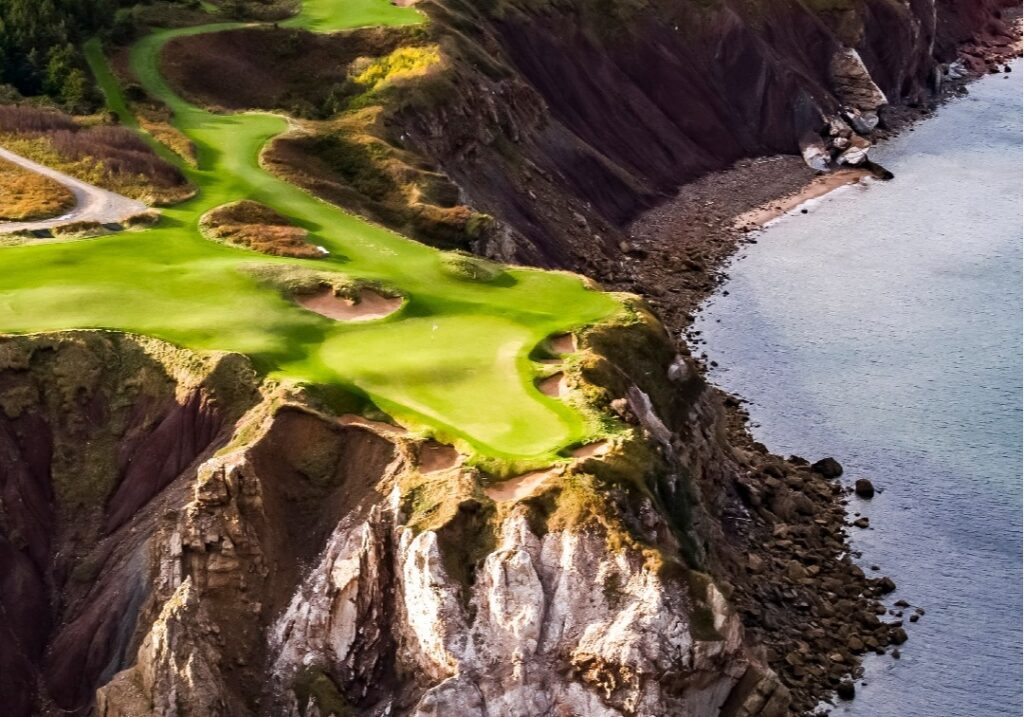
Cabot’s OG property is a coastal gem that has a pair of firm-and-fast courses (Cliffs and Links) that are ranked among the top 100 in the world. There’s also an 11-hole, lighted par-3 course (The Nest) at Canada’s No. 1 golf getaway, which features upscale golf villas, luxury homes and dining options ranging from the picturesque Panorama Restaurant to a lobster shack named after Cliffs’ co-designer Bill Coore.
Cabot Cape Breton
Cabot Citrus Farms (Brooksville, Florida)
Cabot’s first U.S. property is also its biggest (in terms of golf holes), with four courses tucked into a 1,200-acre sanctuary on the west side of Florida. Citrus Farms was formerly a celebrated two-course club called World Woods, but Cabot completely reworked those courses – now named Roost and Karoo – and added an 11-hole par 3 known as The Wedge, as well as a 10-hole alternative course called The Squeeze. There’s also a real estate component, with a quaint village of 36 luxury golf cottages.
Cabot Highlands (Inverness, Scotland)
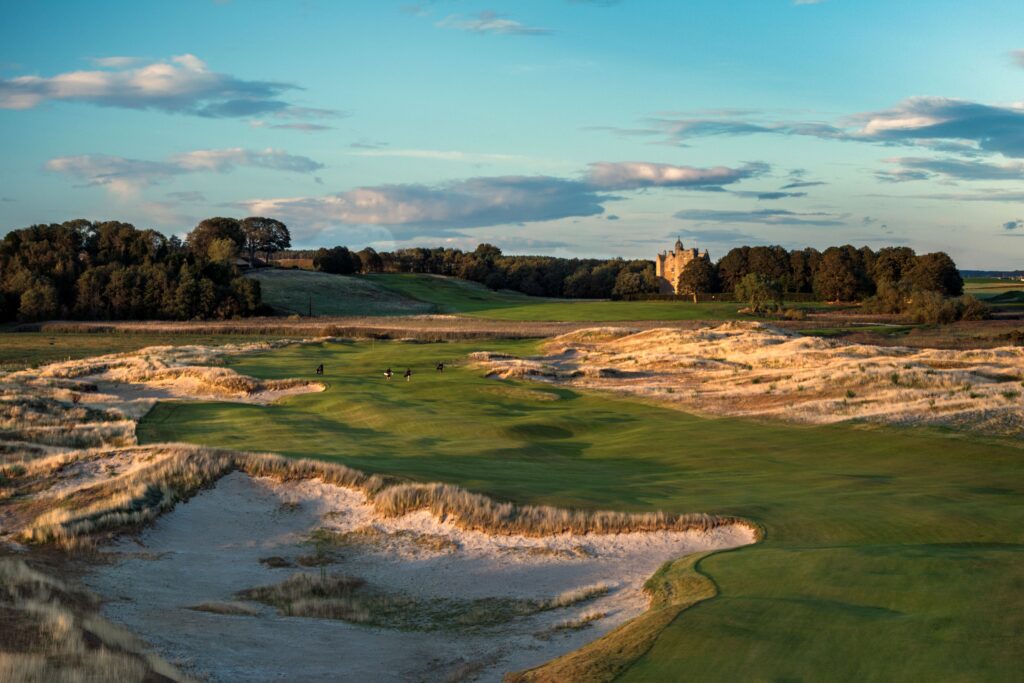
Eminently familiar with Scotland from his travel company days, Cowan-Dewar was able to buy into the region with Cabot’s acquisition of the acclaimed Castle Stuart course in 2022. A second, links-style course was added in 2025 with the opening of Tom Doak’s Old Petty – a layout that sits even closer to the property’s 400-year-old castle. It also helps better position the destination as a jumping-off point for golf getaways to the Scottish Highlands.
Cabot Highlands
Cabot Bordeaux (Le Pian-Médoc, France)
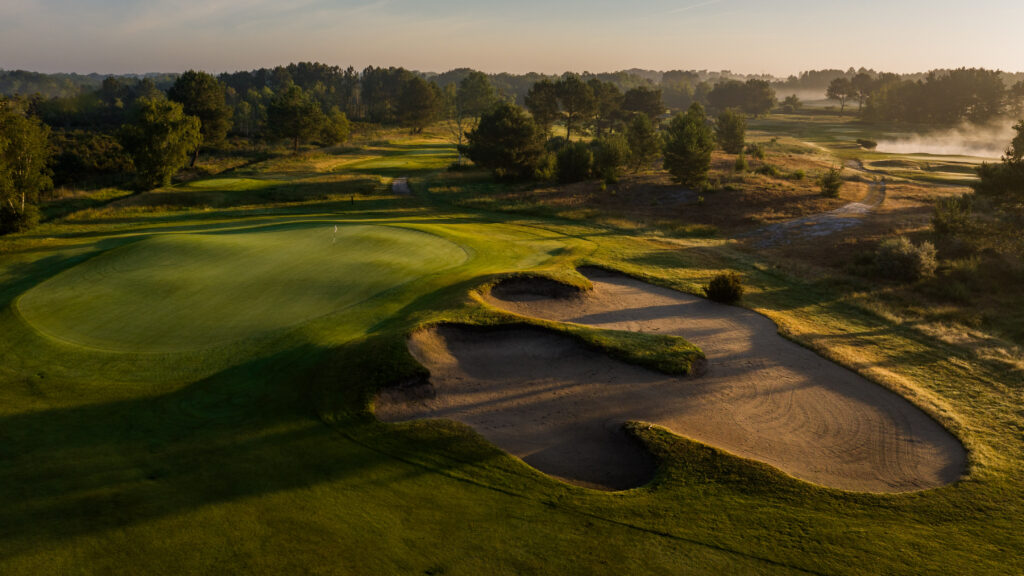
In 2024, Cabot expanded to continental Europe with the acquisition of the former Golf Du Médoc Resort and its two 18-hole courses in the historic and culturally rich wine region of Bordeaux. The 400-acre resort, which has a 79-room hotel, is tucked between rolling vineyards in the French countryside and, by pure coincidence, has courses that over three decades ago were designed by Rod Whitman and Bill Coore, the architects of Cabot’s two courses in Cape Breton.
Cabot Bordeaux
Cabot Saint Lucia (Saint Lucia)
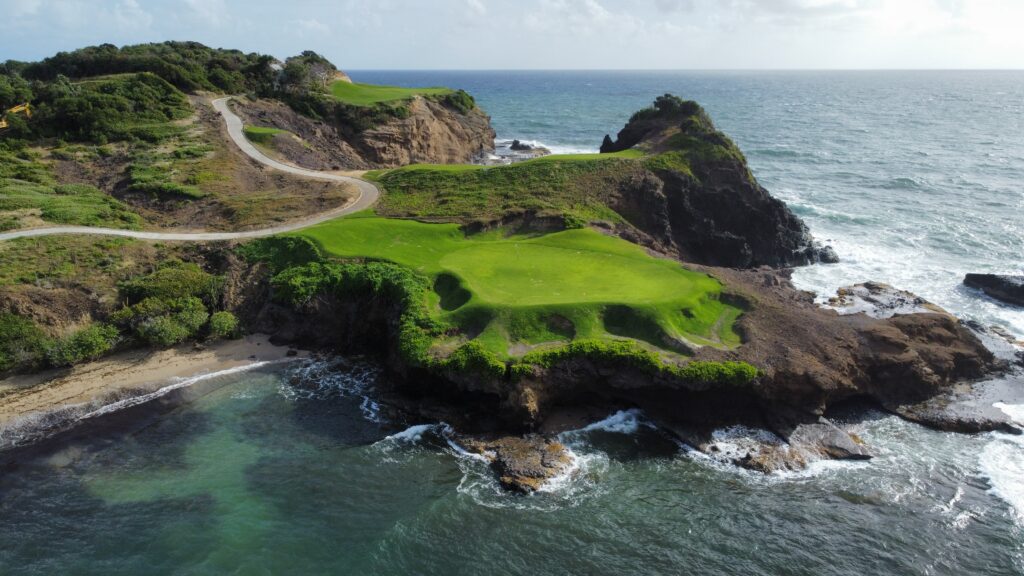
On the northern tip of this volcanic island in the Caribbean, Point Hardy Golf Club is a private community for Cabot members that’s situated on a 375-acre peninsula. Coore and Crenshaw designed the ruggedly beautiful layout, which features nine green sites on the ocean. The 16th and 17th are among the most photographed holes in the Cabot portfolio, back-to-back par-3s with dramatic forced carries over crashing waves and jagged rocks that evoke comparisons to the 15th and 16th holes of Cypress Point on California’s Monterey Peninsula.
Cabot Saint Lucia
Cabot Revelstoke (Revelstoke, British Columbia)
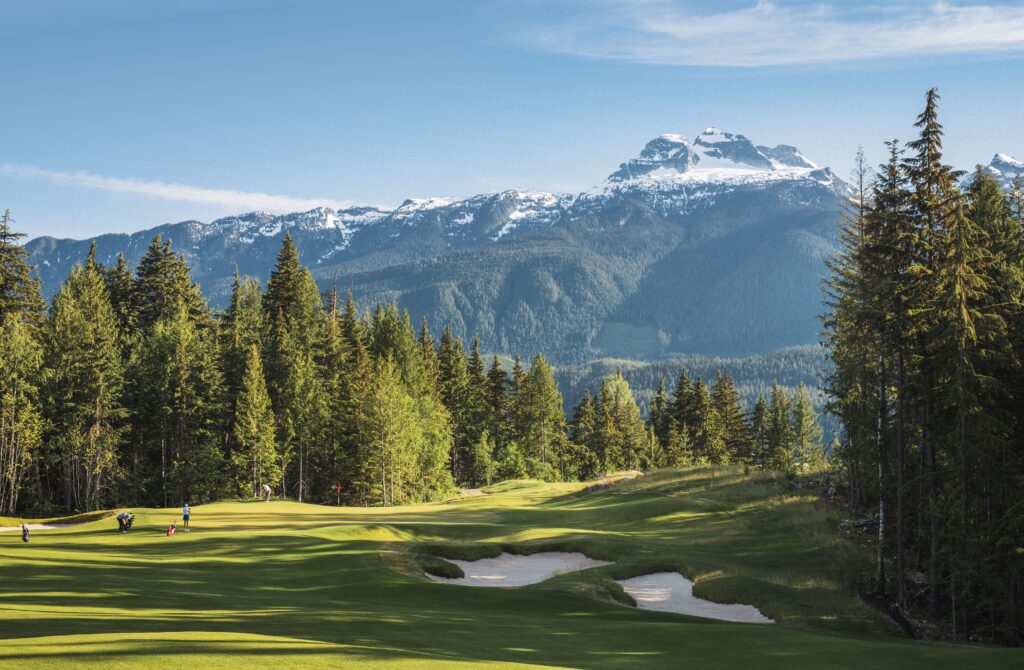
Cabot introduced its first mountain course with the recent unveil of the Whitman-designed layout that has a pair of mighty mountain ranges (Monashee and Selkirk) as a backdrop. Cabot is developing a 155-room hotel at the site and Cowan-Dewar says the location will be a basecamp for year-round mountain adventure in a region that’s celebrated as the “heli-ski capital of the world.”
Cabot Revelstoke
Cabot Wilds (Collingwood Corner, Nova Scotia)
The latest expansion in the Cabot footprint comes not far from where the brand got its start almost 15 years ago. Cabot Wilds is a 2,500-acre destination property that’s set to open in the rolling hills of Cumberland County in late 2027, with an 18-hole riverfront golf course designed by Jeff Mingay as the centerpiece. The region is known as the wild blueberry capital of Canada and the land is owned by Canadian businessman John Bragg, who last year expanded his investment in Cabot Cape Breton.

Cabot Wilds
Lofoten Links (Gimsøysand, Norway)
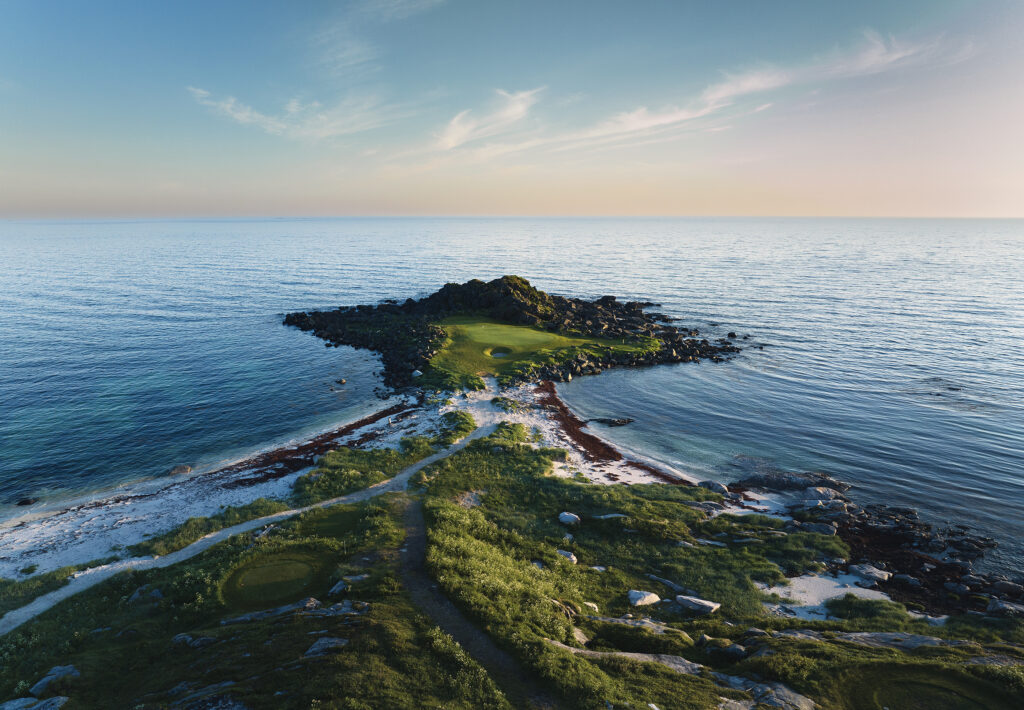
Cabot added the world’s northernmost links-style course to its lineup in 2024 through a strategic investment in Lofoten Links. The 18-hole layout, situated on a rugged seaside landscape above the Arctic Circle, is playable 24 hours a day during the summer months. Unlike the other properties, Lofoten Links wasn’t rebranded with the Cabot name, with Cowan-Dewar and team helping original developer Frode Hov with operations and strategy.
Lofoten Links