

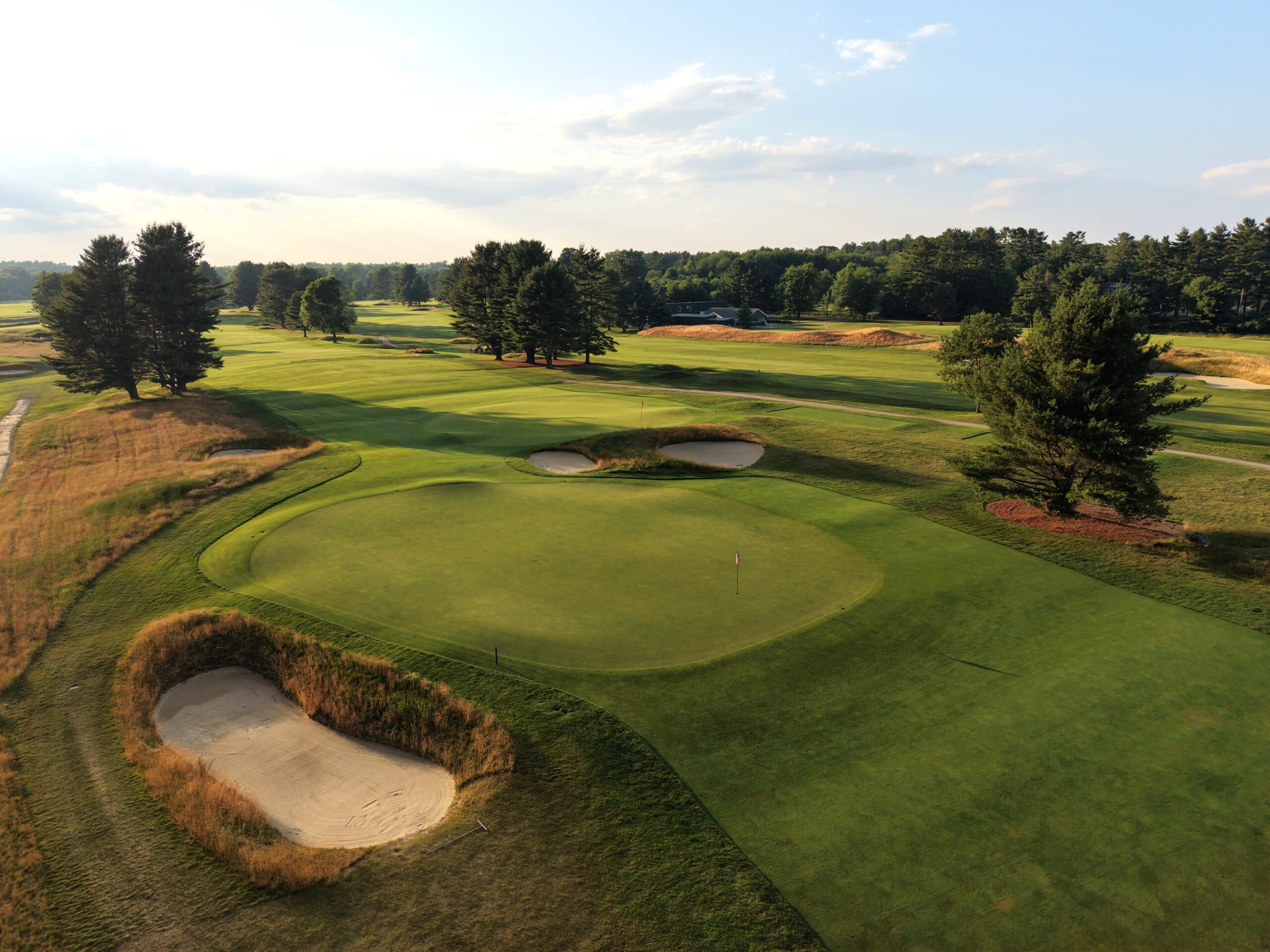
Cape Arundel
As short courses are having a renaissance – particularly the par-3 variety at resorts and destination properties – it’s a fitting time to give proper recognition to a different breed of “shorter” courses that perhaps don’t always get the respect they should in this era of oversize drivers and fly-far golf balls.
A recent golf swing through the New England area contributed to this appreciation, with a stop at Maine’s wonderfully historic Cape Arundel Golf Club in Kennebunkport.
The links-style course, which dates to 1896 and was designed by Walter Travis, is a charming par 69 layout that tips out at 5,859 yards and is squeezed into just 88 acres. There’s just one par 5, but whatever Cape Arundel seemingly lacks in length it more than makes up for in imagination. The small, devilish greens are the course’s defense, with bold contours – including swales, spines and dropoffs – that put a premium on shot-making and precision. Several of the greens are quite literally a few steps from one another.
Cape Arundel and its ilk are somewhat of a rarity, as the National Golf Foundation notes that only about 1% of regulation-length 18-hole courses have a par rating under 70. Many of these courses max out at less than 6,000 yards, a distance that some golfers might scoff at when simply looking at the scorecard.
But distance can be deceiving. In addition to Cape Arundel, a private club that welcomes public play, here are some of the most notable sub-6,000-yard courses (non-executive or par 3) in the U.S. with public access.
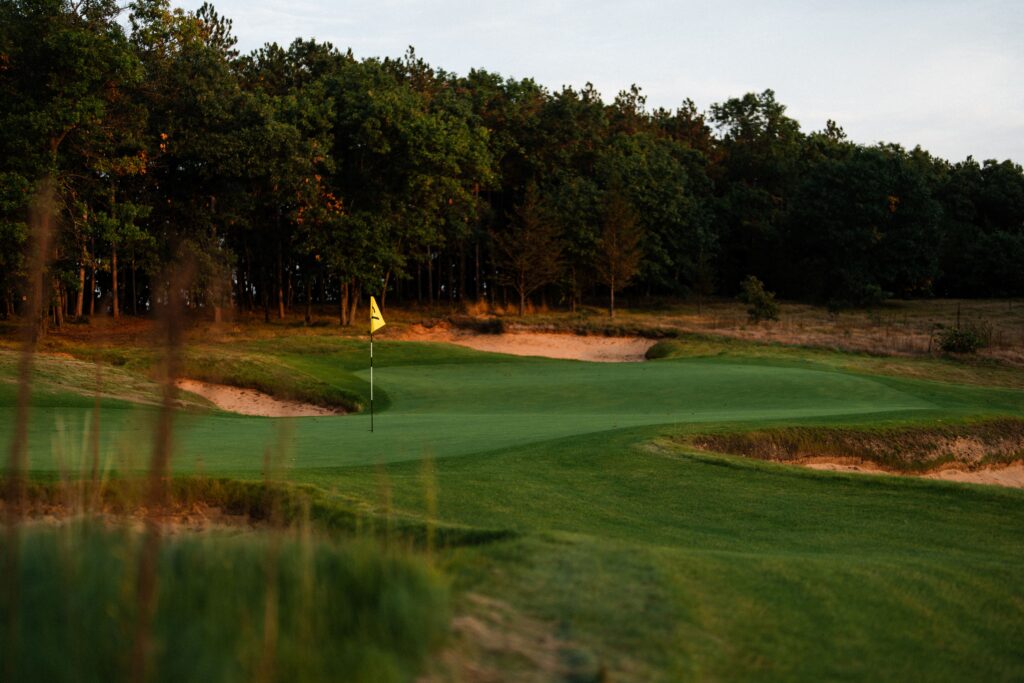
Sedge Valley (Nekoosa, Wisc.)
This newer par-68 layout at the Sand Valley Golf Resort in central Wisconsin was designed by Tom Doak in the spirit of the Heathlands courses of London and the English coast. Embracing strategic challenges and natural beauty with a layout that includes a number of the half-par holes that Doak is a proponent of, this fun and imaginative course is 5,829 yards from the back tees.
Sedge Valley
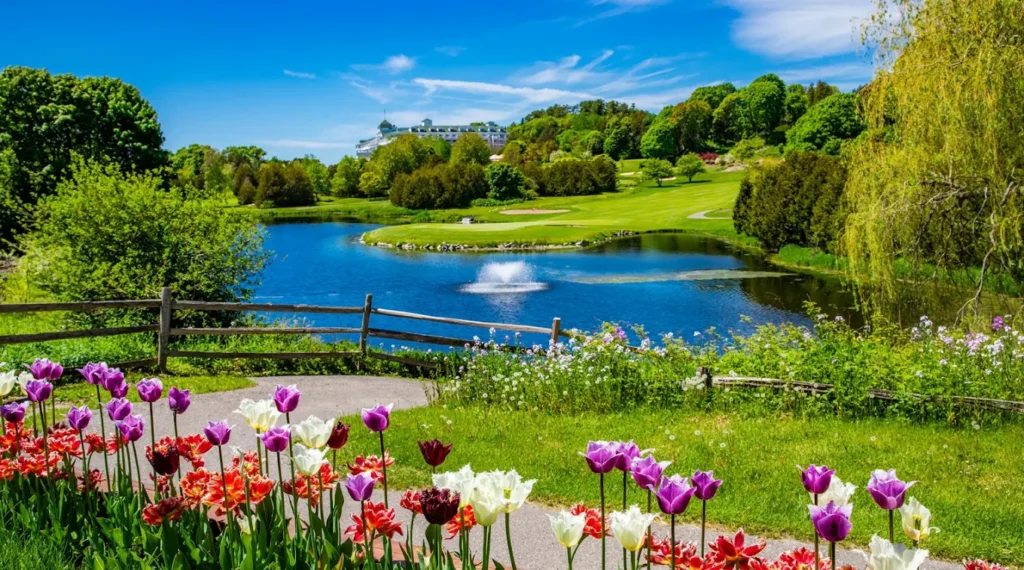
The Jewel (Mackinac Island, Mich.)
This unique layout on historic Mackinac Island features two distinct nines with one par 5 between them and a par of 67. Motorized vehicles are banned here, so golfers are treated to a leisurely, 1 ½-mile horse drawn carriage ride between the two nines – one of which is located across from the Grand Hotel while the other winds through the woodlands on the interior of the island.
The Jewel
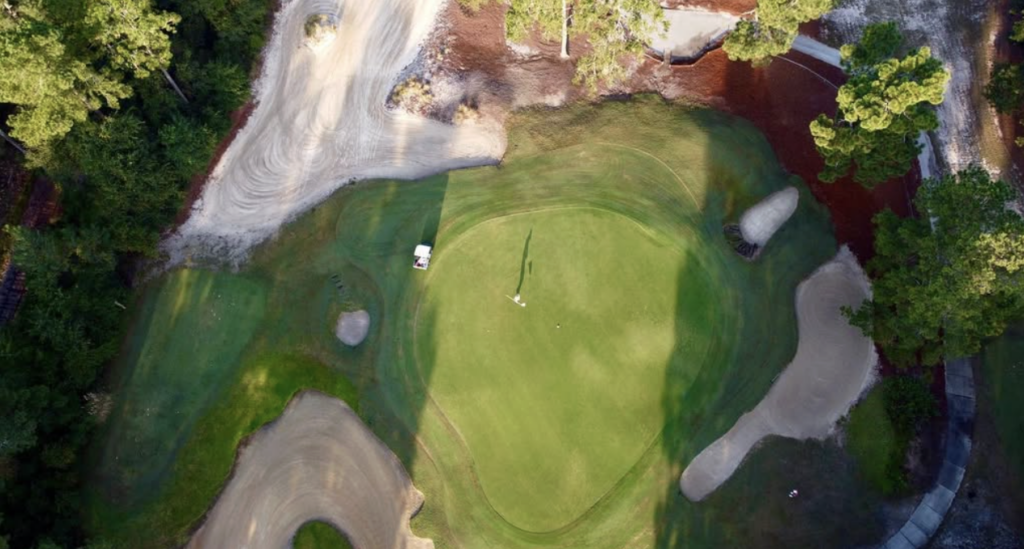
Aiken Golf Club (Aiken, S.C.)
This 1912 Donald Ross design is truly a timeless experience not far from Augusta, Georgia. Listed on the National Register of Historic Places, Aiken G.C. is just 5,755 yards from the tournament tees but has wonderful greens that put a premium on strategy over strength.
Aiken Golf Club
Pacific Grove Golf Links (Pacific Grove, Calif.)
This “poor man’s Pebble,” a municipal facility renowned for its design and affordability, is a par-70 that starts with back-to-back par-3 holes and maxes out at 5,727 yards. The front nine winds through homes in the town of Pacific Grove, not far from 17-Mile Drive, while the legendary back nine plays alongside the lighthouse that serves as the course logo as it jaunts along the coastline.
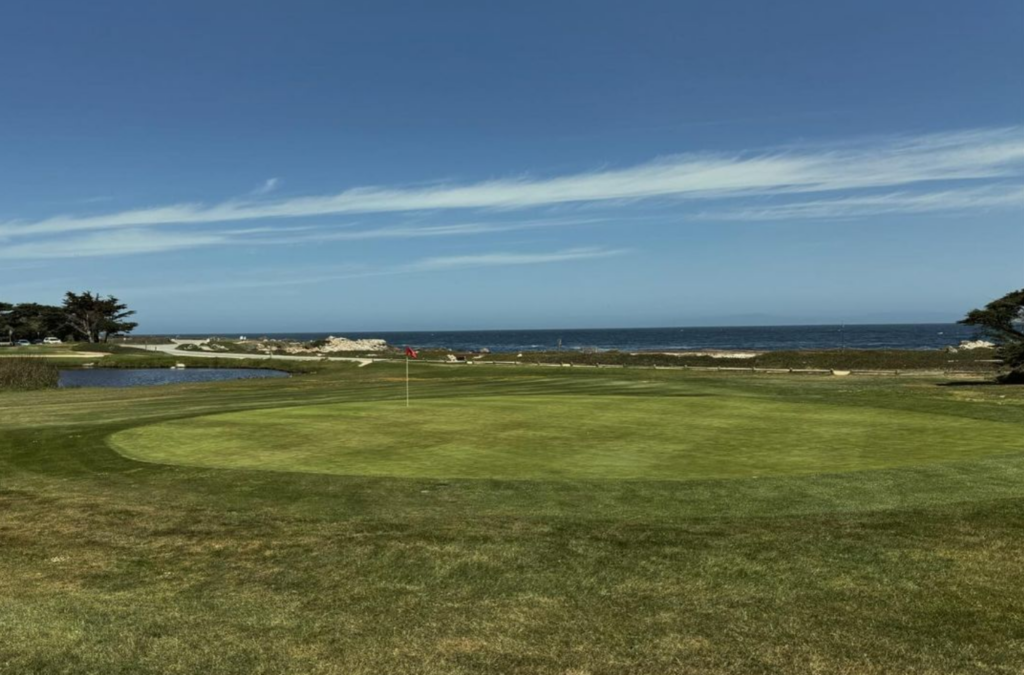
Pacific Grove Golf Links
Pinehurst No. 3 (Pinehurst, N.C.)
Among the regulation courses at the Pinehurst Resort, No. 3 is the shortest of the bunch, at just 5,155 yards. But this par-68 layout, which dates to 1910, unquestionably has Donald Ross design flourishes with its challenging green complexes and an abundance of sandscapes. The front nine has four par-3’s while the back nine is more conventional, with two par 3’s and the course’s only two par-5 holes.
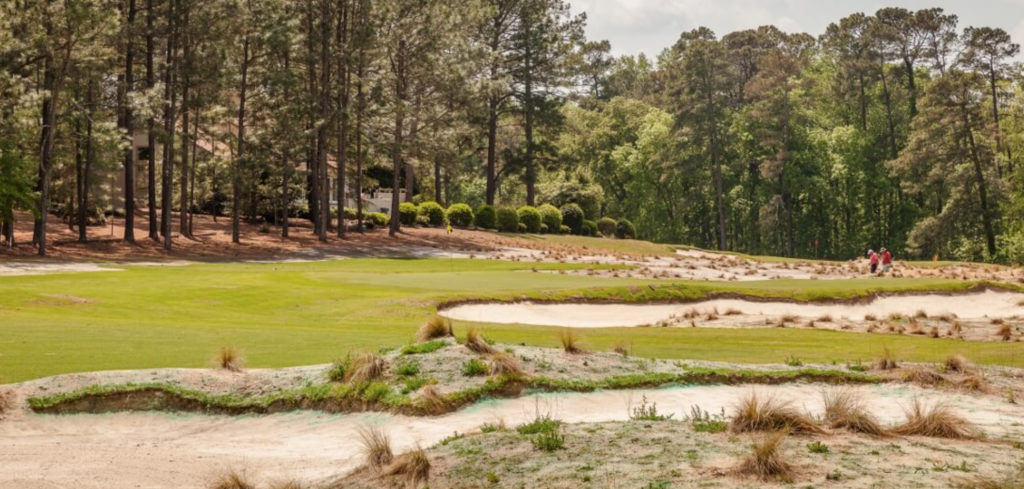
Pinehurst No. 3
Northeast Harbor Golf Club (Northeast Harbor, Maine)
The emblem of this club – which limits play to members during the summer months – is a solitary pine tree with the motto “Far and Sure.” It speaks to the tradition at Northeast Harbor, which is a par-70 that tops out at 5,602 yards and has only one par-4 longer than 400 yards. The course originally opened in 1895 as a 9-hole layout, expanded to 18, then lost a few holes before being reborn just over 25 years ago.
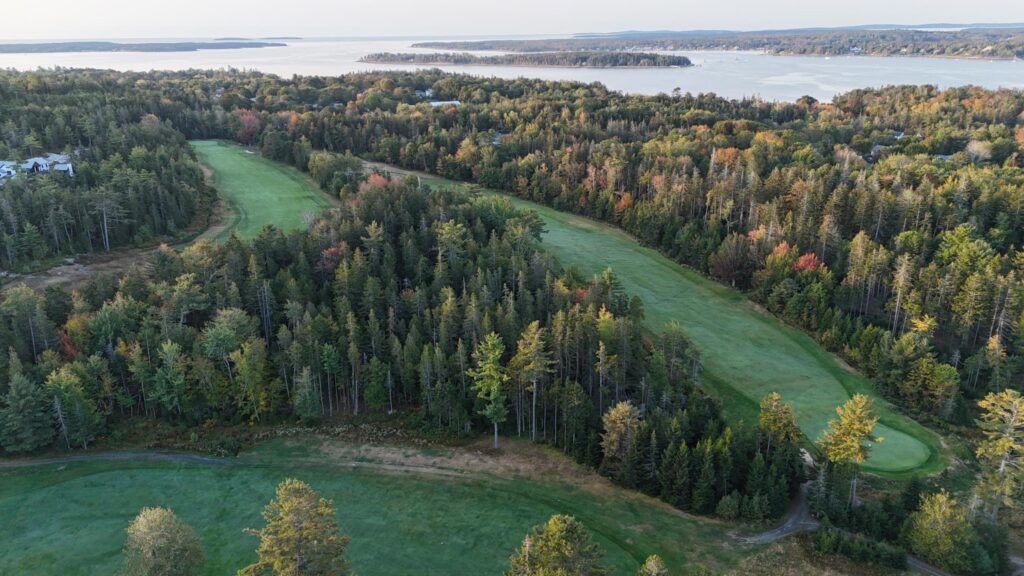
Northeast Harbor Golf Club
Honorable mentions
Copper Creek, a Pete Dye design in Copper Mountain, Colorado, is worth an honorable mention, as it tips out at just 5,884 yards despite playing at the highest elevation of any course in North America. Among others deserving of a nod include The Hideaway in Fort Myers, Fla., Goat Hill Park in Oceanside, California; Wycoff Country Club in Holyoke, Mass., Southern Pines’ Azalea Course in N.C., and the Gene Sarazen-designed Shadow Mountain in Palm Desert, Calif.